Gutter Care for Woodinville's Wooded Acreage and Homes
Heavy Canopy, Heavy Debris
Larger wooded lots define much of Woodinville, and the generous tree cover that owners value comes with a gutter load heavier than most suburban properties ever face. Tall conifers and broadleaf trees blanket these channels with needles, seeds, and leaf litter across every season, and that material compacts into mats no rinse can clear. Throw in the moss that thrives in the shade of dense canopy and a gutter trough quietly fills with a saturated, decomposing mass. From the ground none of it is visible, so a clean roofline gives a false sense of security while the runs above the eaves strain under the weight. Owners on these properties discover that the same acreage and tree cover that make the setting appealing are exactly what overload the drainage. When the heavy rains settle in, a packed gutter overflows against the fascia and pushes runoff toward the foundation rather than carrying it off the roof. Clearing every section by hand, removing the compacted debris, and flushing the full system is what restores drainage on lots that produce this much organic material. The properties that weather the season intact are the ones cleared ahead of the rain, before the canopy and the weather combine to send water spilling where it was never meant to go and toward the structure it should be protecting.
Drainage Away From the Home
On Woodinville's tree-heavy properties, the volume of debris makes downspouts especially prone to hidden failure. Needles and moss compact into the lower runs and choke the flow long before any problem shows in the visible trough. The first stretch of real rain exposes it, as water backs up against a blocked elbow and spills over the edge instead of draining to the ground. That overflow sheets down the fascia and saturates the soil at the foundation, and in the heavy winter ground around Woodinville it works toward erosion, settling, and moisture intrusion over time. The larger the lot and the older the trees, the steeper the challenge, because decades of growth feed an endless supply of debris into the system. Clearing the entire length of each downspout, not merely the top opening, is what keeps a cleaning holding past the first storm. Confirming that runoff discharges well clear of the foundation soils carries equal weight, since water released too close to the home defeats the purpose of clearing the gutters at all. Correcting flattened pitch and reseating runs loosened by years of heavy, water-logged debris completes the work. Owners who treat the downspout as the true chokepoint get a system that carries the considerable rain these wooded acres collect safely away from the home through the wettest months.

Hand Clearing
Hand clearing is the core of every cleaning we bring to Woodinville's wooded acreage, because the sheer debris load on these lots overwhelms any quicker method. The fine needles and leaf litter that fall from tall conifers and broadleaf trees compact into dense mats that blowers only scatter and rinsing only pushes into the next blockage. Working each run by hand ensures no packed section is missed and no elbow is left jammed. Crews pull the debris out, bag it on the property, and confirm the trough is genuinely open rather than briefly disturbed. That care is what keeps water flowing once the rains return in force. A channel cleared the right way carries runoff to the downspouts and away from the roofline instead of holding a heavy, saturated mass that overflows under the first downpour. On Woodinville lots, where the canopy sheds generously through every season, the hands-on approach is the only one equal to the volume these properties produce. Clearing by hand also lets crews assess the system while they work, so a loosened hanger, a flattened run, or a seam beginning to separate gets flagged before it turns into overflow or fascia rot. Owners who choose this thorough method over a fast surface pass get gutters that keep carrying water through the heaviest weather, not a system that looks clean for a few days and then jams under the next heavy fall of needles.
Downspout Flow
Downspout flow is the decisive factor on Woodinville properties, where heavy debris makes hidden blockages almost routine. A trough may look manageable from the ground while the downspout below sits packed with compacted needles and moss, and that concealed jam forces water over the edge the moment heavy rain arrives. Clearing each downspout end to end, from the top opening through every bend to the ground outlet, restores the flow the system was built to handle. Crews flush the runs to confirm water moves freely and check that discharge carries well clear of the foundation soils rather than pooling at the base of the home. In the saturated winter ground around Woodinville, that discharge point is critical, because water standing near a foundation works steadily toward erosion and intrusion. Restoring proper drainage is not an extra here, it is the safeguard that keeps a gutter system defending the structure instead of funneling the considerable runoff from these wooded lots toward the place it can do the most harm. On larger acreage the downspout runs are often long and have shifted or lost pitch over the years, so crews reseat and realign them where needed. The outcome is a continuous drainage path that moves the heavy rain these tree-covered properties collect from roof to a safe outlet, keeping the ground around the home stable through the wettest months of the year.

Moss Treatment
Moss treatment confronts a defining Pacific Northwest problem that Woodinville's dense canopy and constant shade intensify. Moss never stays contained. It spreads from the roof surface into the gutters and back again, reseeding the troughs and feeding the buildup that ends in overflow. Clearing moss out of the channels is necessary, but by itself it changes little for long, because the moss still rooted on the roof keeps sending more down with each rain. Treating the surface to slow regrowth is what breaks the cycle and holds the gutters clear through the wet months ahead. Crews remove moss from the troughs and can treat roof moss before it works back into the channels, addressing the source rather than chasing the symptom season after season. For owners surrounded by mature trees and the deep shade of larger wooded lots, that preventive step turns a single cleaning into durable protection, holding back the regrowth that Woodinville's damp, shaded environment would otherwise keep driving through the whole of the year. The heavily shaded roof sections that stay damp longest under all that canopy are where moss takes hold first, so treatment is concentrated on those areas rather than spread thin. Owners who pair removal with surface treatment spend far less time fighting recurring clogs, because the moss is slowed where it starts instead of being cleared again and again after it has already crept back into the gutter line.
Kirkland's Gutter Cleaning Specialists
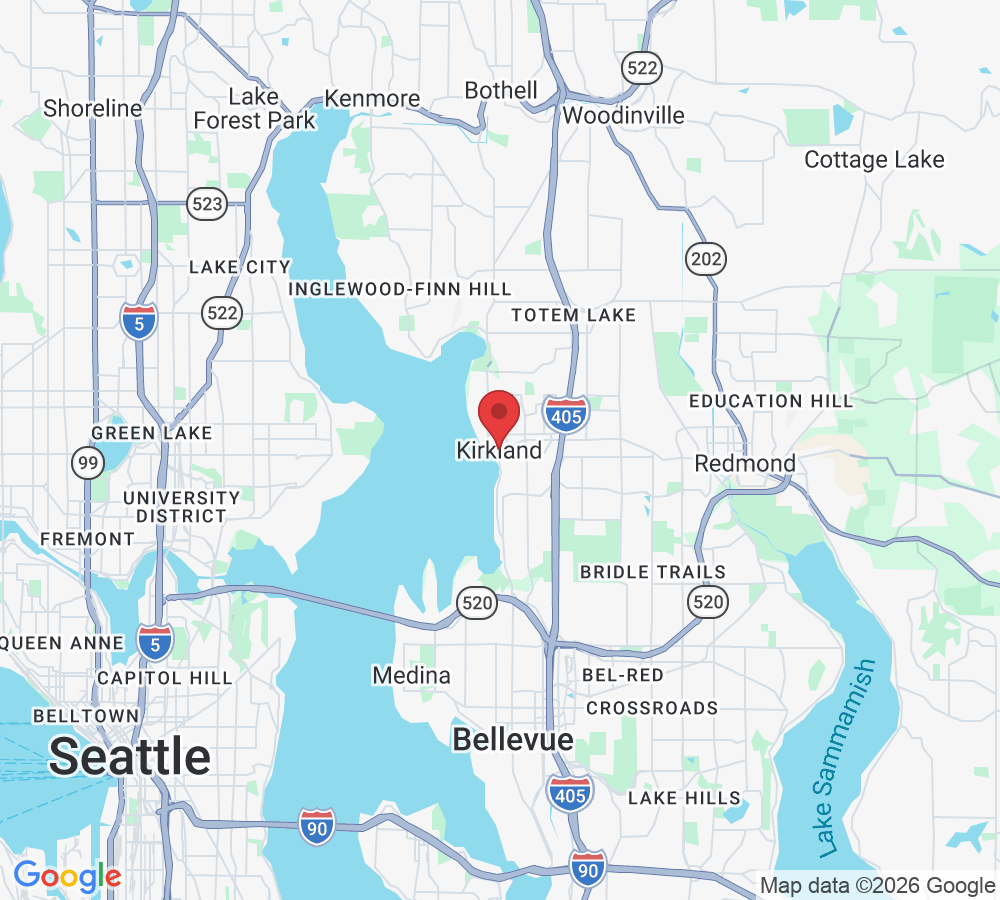
Proudly serving Kirkland, Redmond, Bellevue, Bothell, Woodinville and Kenmore for 14+ years.
Comprehensive Gutter Cleaning Services in Kirkland
Tailored to Your Needs
From routine cleaning to moss removal and downspout repair, our Kirkland services cover the full range of problems that wet Pacific Northwest weather creates. Explore what we offer below.

Hand cleared troughs and flushed downspouts that handle Kirkland's heavy rain.

Guards sized for conifer needles to cut down on future Kirkland clogs.

Clearing and repairing downspouts so water drains away from your foundation.

Safe roof moss removal that stops regrowth from spreading back into gutters.

Fixing sags, leaks, and loose sections before the next Pacific Northwest storm.

Scheduled spring and fall visits timed to Kirkland's needle and pollen cycles.

Brightening streaked, moss stained gutters and exterior surfaces to look new.

Full removal of needles, leaves, and organic debris from every gutter run.

Detailed inspections of pitch, fascia, and flow to catch problems early.

Pressure washing for driveways, siding, and surfaces across your Kirkland home.
Frequently Asked Questions
Gutter Cleaning can be complex, and we’re here to provide answers to common questions. Here are some frequently asked questions from our clients.
Frequently Asked Questions about Gutter Cleaning Kirkland
How often should gutters be cleaned in Kirkland, WA?
Most Kirkland homes need cleaning twice a year, once after fall needle drop from Douglas fir and cedar, and again in late spring once pollen and bigleaf maple seeds settle. Homes under heavy tree cover near Lake Washington often need a third pass before winter rains.
Why do Kirkland gutters clog so quickly?
The Pacific Northwest mix of conifer needles, moss, and prolonged drizzle keeps debris wet and heavy year round. Needles knit into mats that trap moss spores, and Kirkland's 38 plus inches of annual rainfall pushes that buildup into downspouts faster than in drier climates.
Can clogged gutters really damage my foundation?
Yes. When gutters overflow, water sheets down against the fascia and pools at the base of the home. In Kirkland's saturated winter soils that standing water works toward the foundation, causing erosion, settling, and basement moisture over time.
Do you remove moss from gutters and roofs?
We do. Moss is one of the most common gutter problems we see in Kirkland because the shaded, humid conditions are ideal for growth. We clear moss from gutter troughs and can treat roof moss before it spreads back into the channels.
What is the best time of year for gutter cleaning here?
Late fall after the needle drop finishes and early spring before the rainy stretch are the two highest value windows. Scheduling before the heaviest Kirkland rains keeps water flowing away from the roofline when it matters most.
Are you licensed to work in Kirkland and King County?
Operating as , we work throughout Kirkland and the surrounding King County communities. Our crews follow safe ladder and roof practices and document every job with before and after photos so you can see the results.
Still Have Questions About Gutter Cleaning Kirkland?
Speak With a Trusted Gutter Cleaning Expert Today.
What Our Satisfied Clients Have to Say About
We pride ourselves on delivering great results and experiences for each client. Hear directly from home and business owners who’ve trusted us with their Gutter Cleaning needs.

They cleared two seasons of cedar needles and moss out of our Juanita gutters and showed us photos of every section. First heavy rain since and not a single overflow.
Megan Cardoza
Our downspouts were draining right against the foundation. They fixed the slope and cleared the clogs in one visit. Professional, on time, and clearly know Kirkland homes.
David Whitfield
Booked them before the fall rains near Totem Lake. Fast, tidy, and the moss treatment kept our gutters clear all winter. Easily the best gutter service we have used.
Priya Ramaswamy
The Trusted Gutter Cleaning Expert Near You
Ready to hear more about expert services at ?
Contact us today to receive a detailed, no-obligation quote.